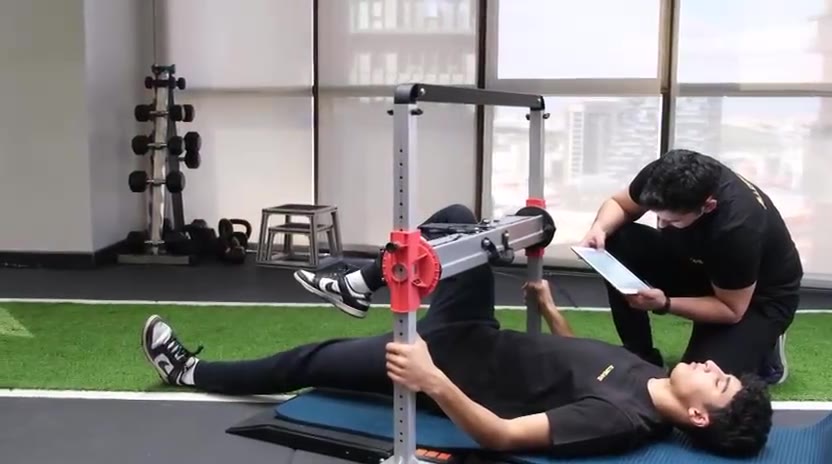
Most young athletes already carry a capable sports device: their phone. It counts steps, knows when the screen went dark at night and can ask a few short questions every morning. AllDreams turns that into something useful for training, without a lab and without a wearable on day one.
What goes in
The AllDreams app builds its daily picture from a few simple inputs.
- A 30-second check-in. Each morning the athlete answers a few short questions: how they slept, how sore they feel, how much energy they have. It is short on purpose, so it becomes a habit rather than a chore.
- The session log. After training, the athlete notes how long the session lasted and how hard it felt. Together, those two answers give the day’s training load, a method known as session RPE.
- The phone’s own data. With the athlete’s permission, the app reads the activity data the phone already keeps, and sleep where it is recorded, through Apple Health on iPhone and Health Connect on Android.
- A wearable, if there is one. An AllDreams device, or a watch or band the athlete already owns, adds heart rate, HRV, sleep and activity. It is welcome, not required.
What comes out
From these inputs the app works out a readiness score each morning and names its band in a word: Ready, Watch or Low. The colour helps, but the word is always there. Beside it sit the scores it is built from, such as sleep and training load, so the athlete can see what moved the number.
On a good morning the app might say something as simple as “Good day for a hard session.” On a low one, it gives the athlete and the coach a reason to talk before training, not a reason to worry.
Measured or estimated
This is the part we care about most. Every value in AllDreams says where it came from and how confident it is. A score built from the phone and the questionnaire, without a wearable, is marked estimated. A value that comes straight from a device or a test is marked measured. Nothing unmeasured is reported as measured.
That label is not small print. An estimated readiness score is still useful, because it follows the athlete’s own trend from day to day. But a coach reading it should know that it rests on answers and phone data, and so should a parent. As a wearable or a test adds measured values, the scores become more accurate, and the labels say so.
Not a medical device
The readiness score gives wellness and performance information. It does not diagnose anything, and it does not decide whether an athlete is fit to play. Diagnosis and treatment are done by licensed clinicians at DHA-licensed partner clinics; AllDreams coordinates. A Low score is a prompt to look closer and talk, nothing more.
Consent decides who sees it
Daily data is personal. It says how a young person slept, how they feel and how hard they trained. So in AllDreams the athlete’s data belongs to the athlete, and consent decides who sees it.
- For an athlete under 18, a parent gives consent. For a child under 13, that consent is verifiable and documented.
- Sharing with the academy, with a coach, with health staff and with a partner clinic is a separate consent each. A coach does not see a child’s data just because the child is in the squad.
- An athlete of 12 or over with their own account is also asked, in words written for their age, about each sharing their parent allowed. If they say no, that sharing stops until they agree.
- Any consent can be withdrawn at any time, and athletes and parents can see, export and delete their data.
This is what makes a phone a training partner rather than a tracker: the athlete knows what it records, and the family decides who reads it.
Getting the most from it
- Check in at the same time each morning, before school or training.
- Answer honestly. A tired morning is information, not a failure.
- Log every session, the easy ones too.
- Look at the trend, not at a single day.
- Talk about it. The best use of a readiness score is a short conversation between the athlete, the parent and the coach.
Your phone will not make you faster. Used well, it can help you, your family and your coach make better decisions about the next session.
Measurements, genetic and biometric insights describe tendencies. They are not diagnoses, do not replace clinical examination and do not determine athletic outcomes. AllDreams gives wellness and performance information and is not a medical device. Diagnosis and treatment are done by licensed clinicians at DHA-licensed partner clinics.